
HOME PLANNING GUIDE
Is Your Home Ready for Aging in Place?
A home does not need to be completely remodeled to become more suitable for aging in place. A useful starting point is to notice where everyday activities are becoming harder or less safe, address immediate hazards, and plan larger changes around the person, the home and likely future needs.
Evidence-led guide · Reviewed September 21, 2026 · Informed by the National Institute on Aging and CDC
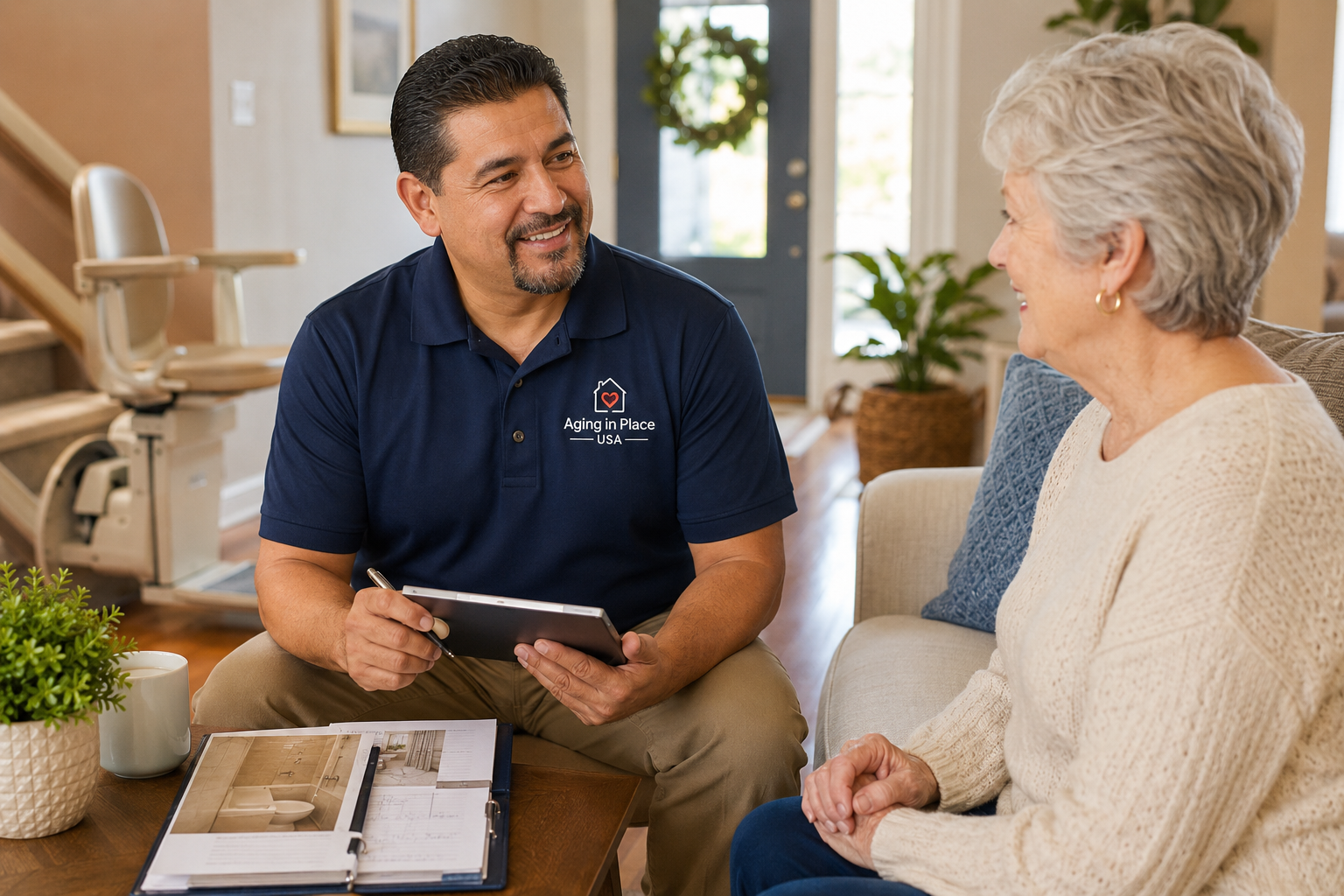
Table of Contents
Start with how the home is used
Home readiness is not a fixed list of products. It is the fit between a person, the activities that matter in daily life, the physical home and the changes that may reasonably need to be accommodated later.
Begin with the home as it is actually used. A step that rarely matters to one person may be a daily difficulty for another. A bathroom may have adequate space but an awkward shower entrance. A bedroom upstairs may work well now, while repeated trips between floors are becoming tiring. The aim is to identify friction and uncertainty without assuming that age alone creates a need for modifications.
Ask yourself
- Where do I feel least steady or confident?
- Which everyday tasks are becoming harder?
- Are stairs becoming tiring or difficult?
- Is getting into or out of the bath or shower harder?
- Are entrances difficult to use?
- Would the home still work if mobility changed temporarily?
Walk through the home room by room
A room-by-room review can reveal practical issues that are easy to overlook when the home is familiar. Consider how each area is reached, used and left—not only whether it looks safe at a glance.
Entrances and outside access
Review steps, secure rails, lighting, thresholds, the condition of paths and whether there is space for step-free access if it becomes useful. Think about carrying bags, opening doors and using the entrance in poor weather—not only the doorway width.
Explore Wheelchair Ramps, Grab Bars & Handrails and Access & Mobility at Home.
Stairs and hallways
Check that handrails are secure, routes are well lit and clutter does not narrow the path. Notice whether stairs can be managed comfortably and whether essential daily activities require repeated changes of floor.
If stairs are already a defined barrier, see Stairlifts.
Bathroom
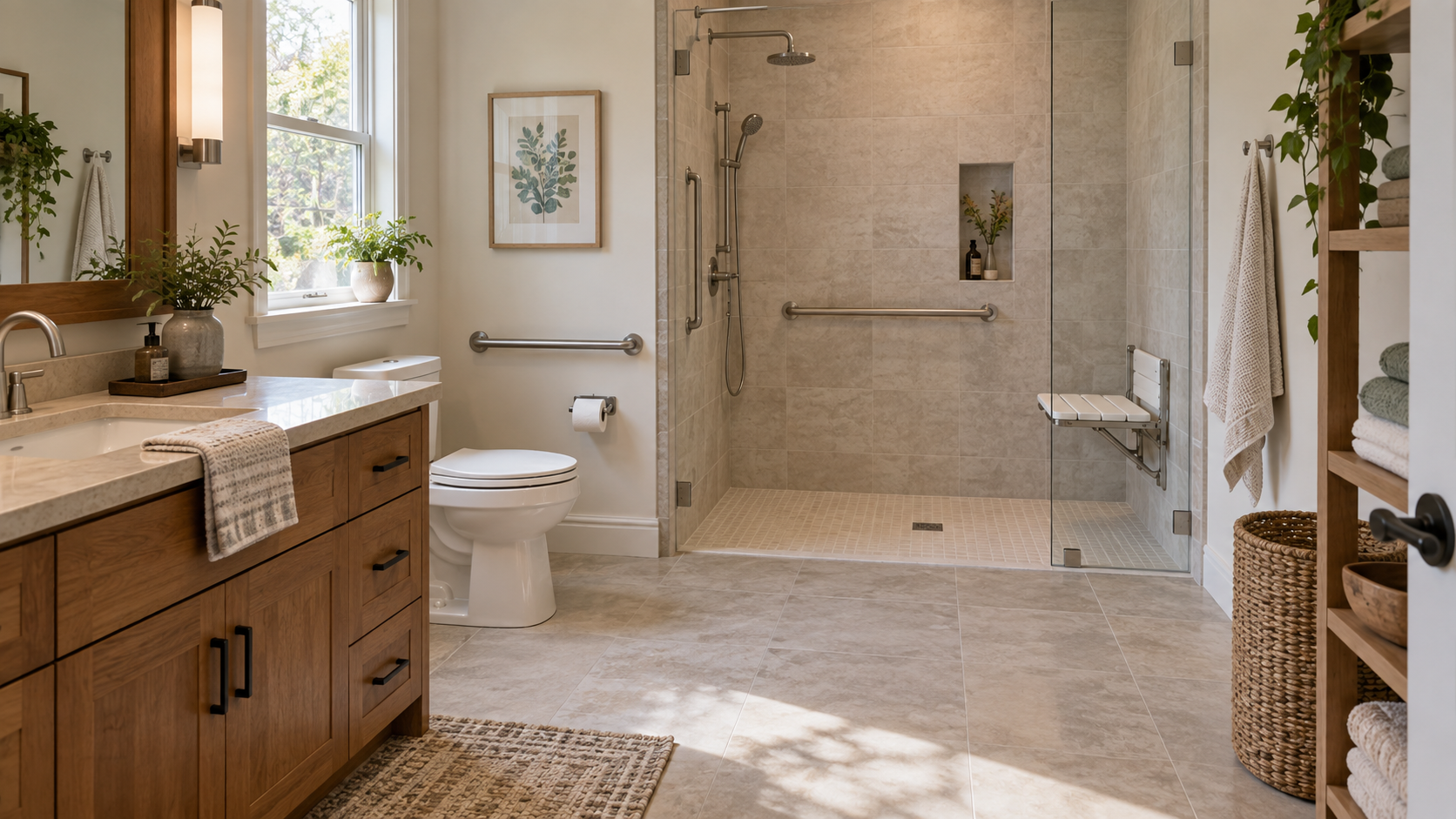
Review getting into and out of the bath or shower, using the toilet, wet or slippery surfaces, positions where support may be useful and whether there is enough clear space to move without awkward turns.
Explore Grab Bars & Handrails, Accessible Bathroom Remodeling and Adapt My Bathroom.
Bedroom and living spaces
Look for clear routes, useful lighting, secure floor coverings and furniture that does not obstruct movement. Consider the ease of getting up and down and whether frequently used items can be reached without stretching or climbing.
Kitchen
Review reach, movement space, the location of frequently used storage, and comfortable use of appliances and work surfaces. Small organizational changes may be more useful than remodeling when the layout itself is working well.
Look for immediate hazards first
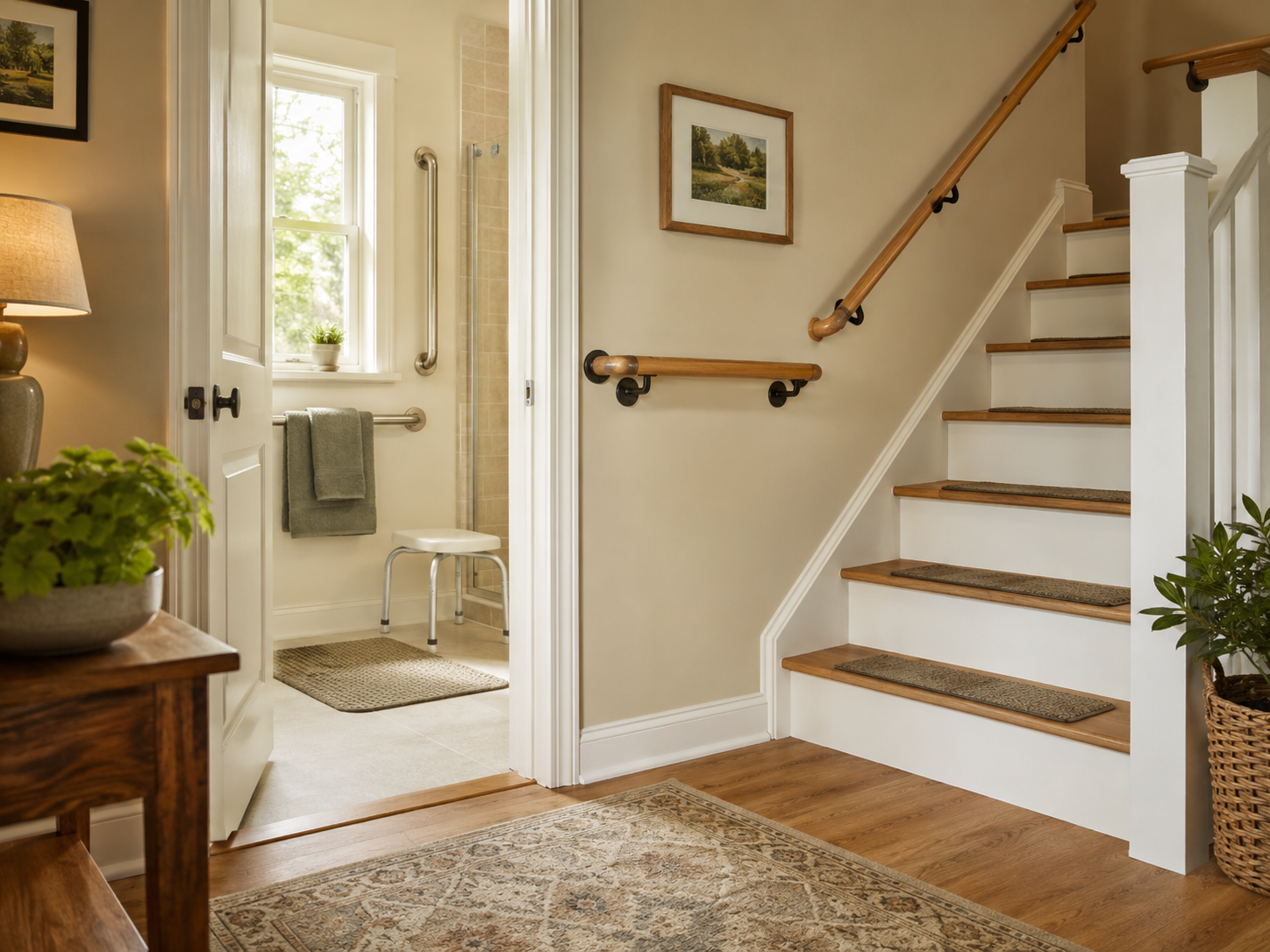
Small hazards can often be addressed before major remodeling is considered. The first priority is usually to deal with clear, present difficulties rather than planning every possible future change at once.
- Loose rugs or mats that move underfoot
- Clutter or cables in regular walking routes
- Poor lighting, glare or hard-to-reach light switches
- Loose or unsecured railings
- Slippery wet areas around sinks, tubs or showers
- Awkward thresholds or uneven transitions
- Frequently used items that require unsafe reaching or climbing
Addressing these issues may reduce hazards and make everyday movement more predictable. It does not guarantee that a fall or injury will not occur.
Think beyond today’s needs
Forward planning is most useful when it creates flexibility without committing to changes that may never be needed.
Routine work can be an opportunity to avoid creating new barriers. When decorating, improving lighting may be worth considering. During bathroom work, walls can be prepared for suitable grab-bar fixing points even if bars are not needed immediately. When remodeling an entrance or doorway, avoid narrowing access unnecessarily. If essential activities are spread across floors, consider how that arrangement might work if stairs become temporarily difficult.
Plan for flexibility, not for every possible future scenario.
When a simple checklist may not be enough
A checklist is useful for noticing obvious hazards. A professional assessment may be more helpful when the main problem is unclear, several needs interact, or the home must support changing day-to-day abilities.
Home Safety Assessment
Often a good fit when the main question is: “What hazards or practical priorities should I address?” The review typically focuses on the home environment, safety concerns and sensible improvement priorities.
Occupational Therapy Home Assessment
May be more relevant when mobility, transfers, fatigue, cognition or daily activities need to be considered in relation to the home. The focus is the fit between functional needs, routines and the environment.
Neither assessment is universally better. The right starting point depends on the question you need answered and whether there are personal or functional factors that a general safety review may not fully address.
A simple home-readiness checklist
Use this as a self-review tool to record what appears to be working and what deserves a closer look. It is informational and is not a clinical or professional assessment.
| Area | What to look at | No issue | Review soon | Needs attention |
|---|---|---|---|---|
| Entrances | Steps, rails, lighting, thresholds, paths and door use | □ | □ | □ |
| Stairs | Handrails, lighting, confidence, fatigue and floor changes | □ | □ | □ |
| Bathroom | Bath or shower access, toilet use, wet surfaces and support | □ | □ | □ |
| Bedroom | Clear routes, lighting, getting up and access to essentials | □ | □ | □ |
| Living areas | Furniture layout, clear movement and comfortable seating | □ | □ | □ |
| Kitchen | Reach, movement space, storage and work surfaces | □ | □ | □ |
| Lighting | Coverage, glare, nighttime routes and reachable switches | □ | □ | □ |
| Flooring and trip hazards | Loose rugs, cables, clutter, uneven surfaces and wet areas | □ | □ | □ |
| Access between floors | Location of essential daily activities and alternatives | □ | □ | □ |
| Emergency and contact planning | How help would be reached and key information accessed | □ | □ | □ |
Do you need a modification or an assessment?
The next step depends on how clearly the need can be defined. Some homes benefit from small safety improvements; others have a specific access problem or a combination of needs that is difficult to interpret without professional input.
Small safety improvements
Useful when the priority is clear and limited—for example, improving lighting, reducing trip hazards or adding minor rails or supports where appropriate.
Specific modification
Useful when the problem and intended outcome are already understood, such as improving bathroom access, adding a ramp or addressing difficulty with stairs.
Professional assessment
Worth considering when needs are mixed, changing or difficult to interpret, or when personal function and the home need to be reviewed together.
Assess & Plan My Home →
Home Safety Assessments →
OT Home Assessments →
What about costs?
Costs vary substantially because a small safety improvement and a structural modification are very different projects.
The final cost may depend on the scale of work, the construction of the home, product and specification choices, installation requirements and local geography. Avoid choosing a solution from a headline price alone: first clarify the need, what the work includes and whether the home presents unusual installation constraints.
Frequently asked questions
What does it mean for a home to be ready for aging in place?
It means the home supports the person’s current everyday activities and can accommodate likely changes without creating unnecessary barriers. Readiness depends on the person, the home and how it is used; it is not a universal product checklist.
Do I need to remodel my whole home?
Usually not. Many reviews begin with immediate hazards, lighting, clear routes and a specific difficult activity. Larger work may be useful when there is a defined access problem or when planned remodeling is an opportunity to build in flexibility.
What should I check first?
Start with the places and activities that feel least safe or confident. Review entrances, stairs, bathrooms, lighting, loose rugs, clutter, railings, wet surfaces and items that require awkward reaching.
When should I consider a home safety assessment?
It may be useful when you want an independent review of hazards and practical priorities, when several areas of the home need attention, or when you are unsure which improvements to address first.
What is the difference between a Home Safety Assessment and an Occupational Therapy Home Assessment?
A Home Safety Assessment generally focuses on hazards and improvement priorities in the environment. An Occupational Therapy Home Assessment considers how mobility, transfers, fatigue, cognition and daily activities interact with the home. Neither is universally the better option.
How often should I review my home as my needs change?
There is no single timetable for everyone. Review the home again when daily activities become harder, mobility or health needs change, after a fall or near miss, or before planned work that could affect future access.
Sources & review
- National Institute on Aging: Aging in Place: Growing Older at Home
- National Institute on Aging: Home Safety Tips for Older Adults
- Centers for Disease Control and Prevention: Older Adult Fall Prevention
Last reviewed: September 21, 2026
AIPUSA provides general information to help people explore home-safety and accessibility options. This guide is not medical, occupational therapy, building, legal or financial advice, and it does not replace an assessment of individual needs or the home.